
Project description
A focus of our group has been the study of Stit, Drosophila RET, its role in cell migration and novel observations made by the lab earlier1. We use Drosophila melanogaster, where we can overexpress and/or knock down a gene of interest in a specific area within an epithelial tissue using the GAL4/UAS expression system. This represents a good in vivo model for epithelial based cancers or other diseases affecting epithelial tissue. It enables comparison with control tissue side by side with fluorescently marked experimental tissue, allowing for sensitive detection of changes to growth, migration or cell death. Using confocal microscopy, we track changes in these 3 parameters to draw conclusions about the contribution of signalling proteins via a combination of oncogene expression and RNA interference mediated knockdown within these marked cells. We aim to characterise novel effects of the oncogene driven cell migration in vivo using Drosophila tissues.
Although the theory of the problem may be complex, we have the expertise available to help the student understand it, and master Drosophila genetics and molecular techniques, as well as microscope and image analysis techniques, required to solve it. Bring your interest and enthusiasm and we will help with the rest.
- O’Farrell, F., Wang, S., Katheder, N., Rusten, T.E. & Samakovlis, C. Two-tiered control ofepithelial growth and autophagy by the insulin receptor and the ret-like receptor, stitcher. PLoS Biol 11, e1001612 (2013).
- O’Farrell, F. et al. Class III phosphatidylinositol-3-OH kinase controls epithelial integrity through endosomal LKB1 regulation. Nat Cell Biol 19, 1412-1423 (2017).
- Katheder, N.S. et al. Microenvironmental autophagy promotes tumour growth. Nature. 541, 417-420. doi: 10.1038/nature20815. Epub 2017 Jan 11. (2017).
- Károlyi, D. et al. Fatty acid synthesis supports tumor progression through keeping TORC1 receptive for Insulin/PI3K signaling. bioRxiv, 2025.02.19.639068 (2025).
Methods
Model Organisms, Microscopy, Immunostaining, Transgenic lines, Activity or functional measurements, Other techniques includes microdissection, image analysis and possibly cloning, qPCR. PCR
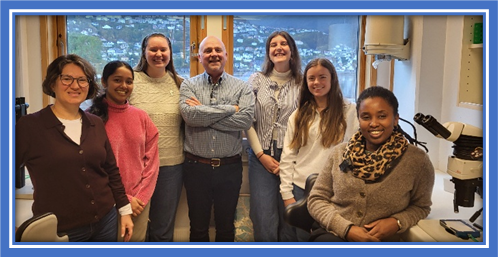
Depending on findings, project development and stage, more molecular work may be involved. We are currently myself, 1 technician, 2 PhDs, 2 Ms, and often have Erasmus and project students. Take contact with myself or someone from the group if you want more info.
Starting date/period: 23 Oct 2025 – 15 May 2026
The project involves: labwork
Involvement: 40 hours
Interested by this project? Need more info? Contact Fergal O’Farrell (fergal.ofarrell@uib.no)
Project number: 053